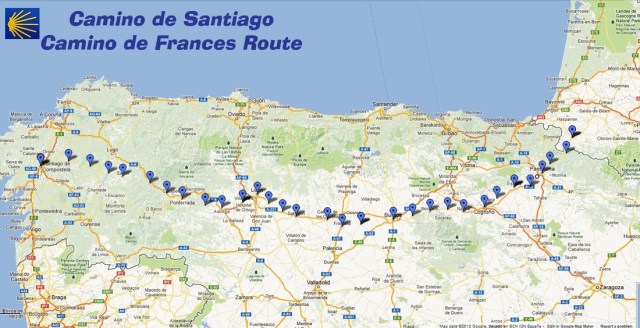
It occurs to me that some who begin reading, perhaps subscribing to this blog, are scratching their heads, wondering just what is the Camino de Santiago. It wasn’t all that long ago I would have been wondering myself. So for friends who would like to know more, here’s the short of it (if it’s possible to say that of an historic pilgrimage which can range from 60 miles to 500 miles to a trek of 1000 miles or more).

Let’s work from the destination, Santiago de Compostela. This is a city in the northwest of Spain which is home to the grand Basilica de Santiago, part of the greater Santiago de Compostela World Heritage Site. The Cathedral, consecrated in 1211, is believed to contain the remains of Saint James, one of the original 12 apostles. Saint James, in the Spanish language, is Santiago.
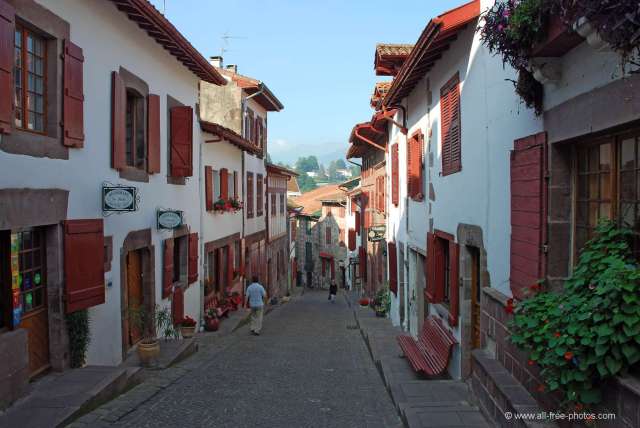
For over a thousand years, pilgrims have visited the site of St. James’ remains. These pilgrims have come from far and wide, thus there are a number of different routes to Santiago de Compostela. Undoubtedly, the most common route today begins in the French town of St. Jean Pied de Port, then crosses the Pyrenees through a pass said to have been used historically by Charlemagne and, later Napoleon, in their various incursions into the Iberian Peninsula.
The pilgrimage route which begins in St. Jean Pied de Port is commonly known as the French Route. Today it is suggested as a way divided into 33 legs, covering 491 miles. This is the adventure I am about to undertake, hoping to cover the entire distance in about 5 weeks, then perhaps walking further another 3 days to Finesterre (or Fisterre), at one time believed to be the end (fines) of the earth (terre).
Wish me luck, friends. If you want to follow along, you can subscribe to this blog. I hope to keep it updated as time and wifi allows.
 Camino de James